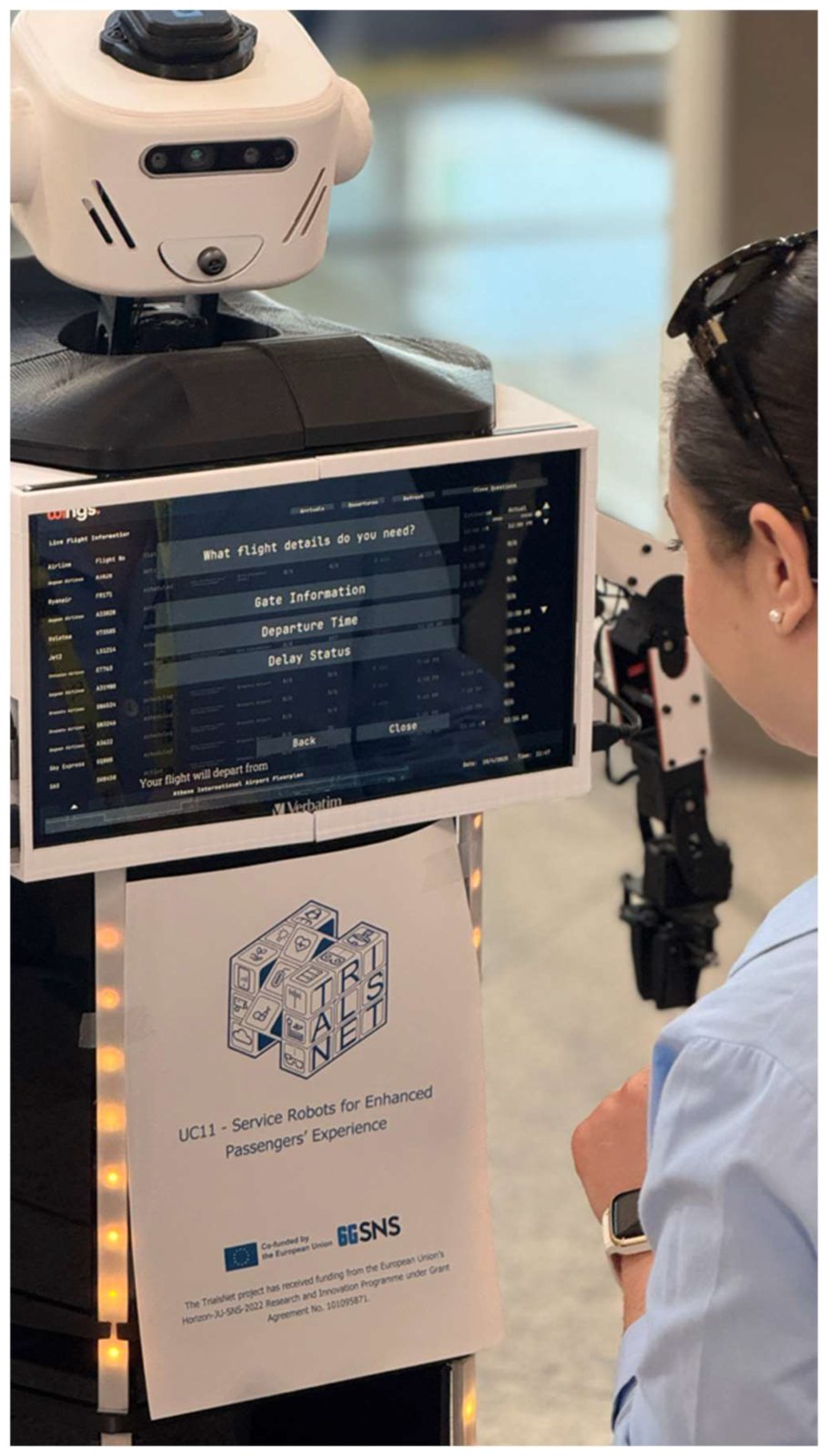
On 10 April 2025, the European TrialsNet project and WINGS ICT Solutions tested the WINGO humanoid robot at Athens International Airport. The robot navigated autonomously within a designated terminal area, gave passengers flight information and directions, and communicated with airport supervisors.
Eight thermal cameras fed a system that estimated passenger flows and detected congestion. The robot presented information on a touchscreen and responded with synthesised speech. Supervisors saw the readings on a separate dashboard. The trial explored how such a system could support staff decisions.
Eight hours, with no before-and-after comparison
A technical study published in Sensors in January 2026 reports eight hours of continuous robot operation with no recorded interruption during that trial. The user experience assessment involved ten participants. The authors say they did not collect comparable passenger flow measurements before deployment.
The trial demonstrates that navigation, communications and passenger information worked together in a real terminal. It does not establish sustained airport-wide operation or shorter queues than under the previous process. The robot named in the technical study is WINGO.
Our sources
- UC11 – Service Robots for Enhanced Passengers’ Experience ↗TrialsNet · Checked 9 November 2026
- AI-Powered Service Robots for Smart Airport Operations ↗Sensors / Giannopoulou et al. · 25 January 2026 · Checked 9 November 2026
AI tools assist our editors. Articles are published after human approval. Practical examples are ΠΕΡΑ analysis unless stated otherwise. How we work