Two papers posted on Hexagon on November 7 and presented by Anthropic on November 17 explore theoretical physics using Claude research agents. The company says the systems worked for roughly six weeks on problems selected by a researcher, with human checks on the results.
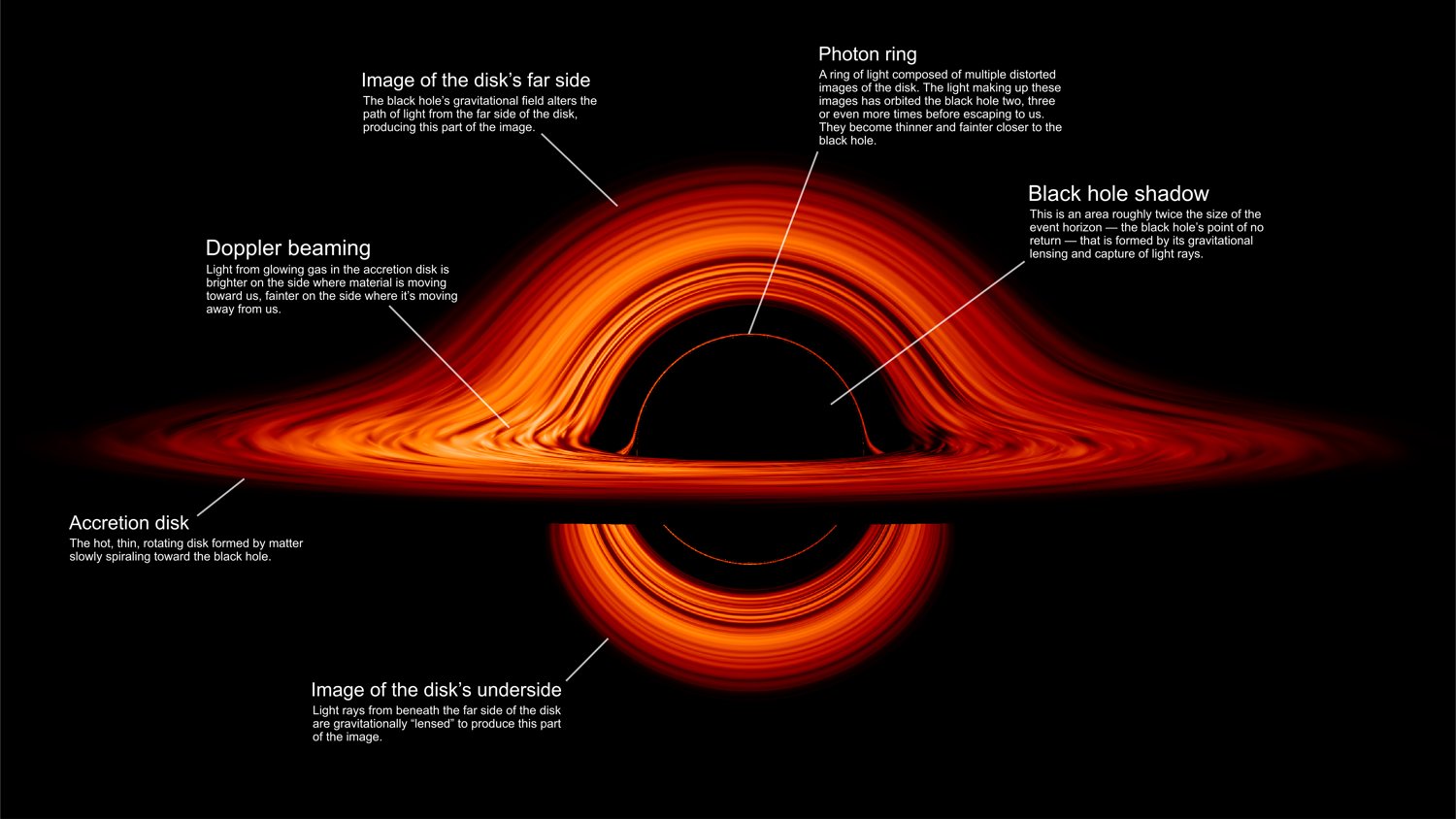
The first computes a coefficient determining a thermal transition in a particular particle theory. Its negative value indicates an abrupt transition, analogous to the Hawking–Page transition associated with black holes. The calculation had remained unfinished since it was set up in 2003.
The second establishes the optimal asymptotic bound for a particular version of the modular bootstrap, a method for ruling out inconsistent candidate theories. Its key constant is approximately 9.1266. The result identifies a limit to what that method can achieve.
The scope of verification
The papers’ provenance statements attribute the initial results to an internal Claude research model. They describe checks by a physicist and different calculations reaching the same answer. They do not establish that every commercial Claude version reproduces the research workflow.
Hexagon labels the texts primarily AI-generated, with human understanding of some parts. These are posted preprints, without an announced journal peer review. Their significance lies in agents undertaking multistage mathematical work on defined problems with checks. Neither paper provides a general solution to quantum gravity.
Our sources
- Claude solves two open problems in the physics of black holes ↗Anthropic · 17 November 2026 · Checked 20 November 2026
- The Hawking-Page transition at weak coupling ↗Hexagon / Anthropic · 7 November 2026 · Checked 20 November 2026
- The spinless modular bootstrap at large central charge ↗Hexagon / Anthropic · 7 November 2026 · Checked 20 November 2026
AI tools assist our editors. Articles are published after human approval. Practical examples are ΠΕΡΑ analysis unless stated otherwise. How we work