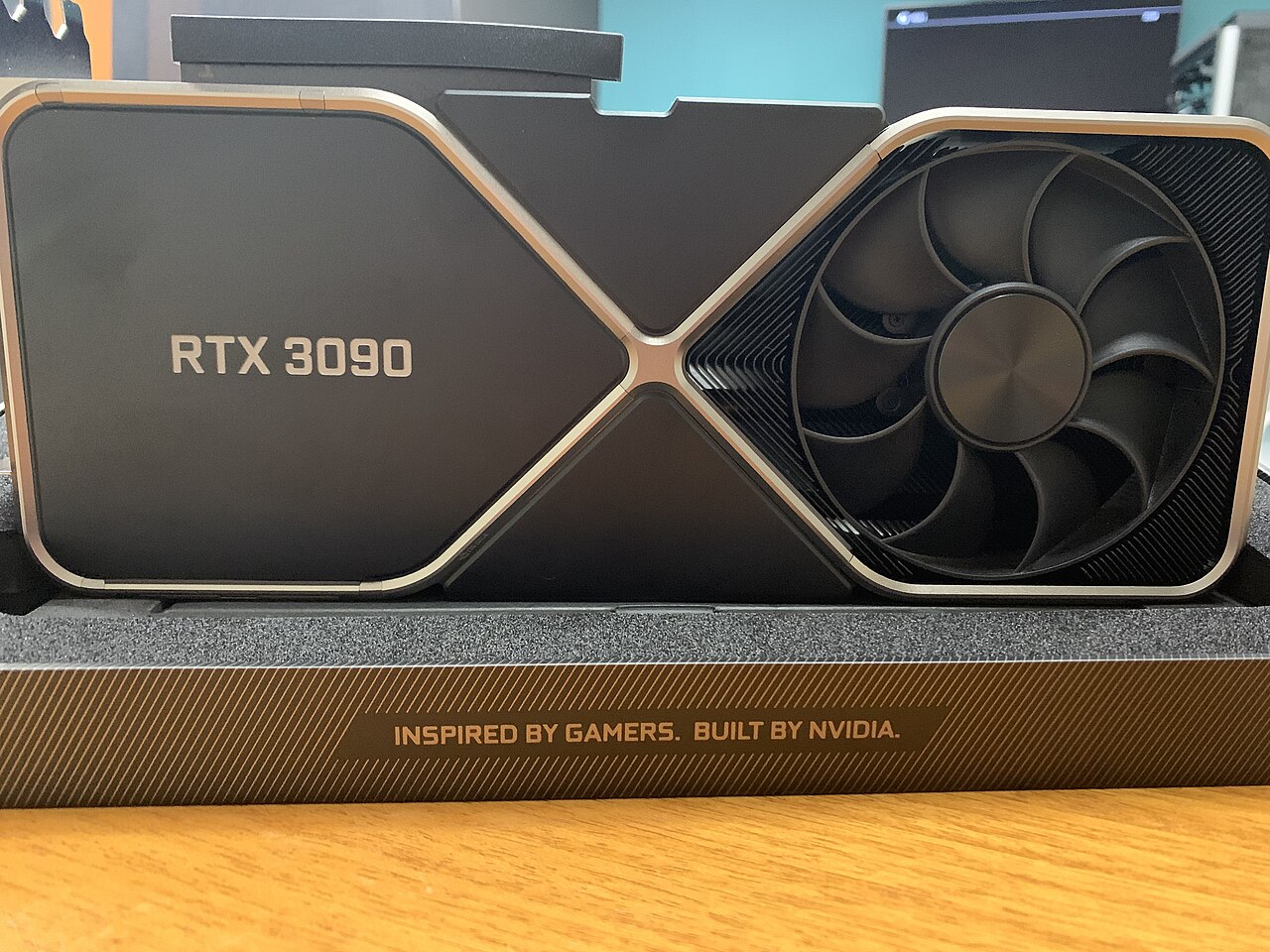
An older graphics card can generate AI images noticeably faster without a hardware upgrade. That is the finding of an RTX 3090 Ti test of GPU Unlock circulating in the Stable Diffusion community. Zagitta’s open tool changes the instruction rate for particular FP16/BF16 calculations on supported Ampere chips in the GeForce RTX 30 family.
In a test by under-_-null, Z-Image Turbo BF16 took 4.35 seconds per image instead of 6.79 seconds. That represents 56.1% higher throughput, equivalent to roughly 36% less time per image. MOSS-Image SFT INT8, however, took 27.23 seconds instead of 27.31 seconds: a negligible difference.
The gains depend on the setup
The tester used Ubuntu, NVIDIA driver 615.71.09 and ComfyUI 0.42.1, keeping the same 450 W power ceiling. Each image configuration had 15 measured runs after three warmups, with matching prompts and seeds. Median timings include text processing and saving, but exclude initial model loading. This is a published community test on one card, not a PERA benchmark or a result for the entire product family.
The repository explains why the benefit is uneven: workloads constrained by memory transfers or using different arithmetic do not gain equally. The main project loads a Linux kernel module before the regular NVIDIA driver. It is not an official NVIDIA upgrade.
For creators and teams running models locally, the development raises a practical question about extracting more value from existing equipment. It does not establish a doubling of every application, extra memory capacity or equivalent improvements in games.
Our sources
- GPU unlock 1.0.0 — README ↗Zagitta / GitHub · Checked 26 October 2026
- RTX 30-series GPU Unlock: ComfyUI benchmark ↗u/under-_-null / Reddit · Checked 26 October 2026
- GPU Unlock discussion ↗Hacker News · Checked 26 October 2026
AI tools assist our editors. Articles are published after human approval. Practical examples are ΠΕΡΑ analysis unless stated otherwise. How we work