A series of photographs of a room can become the starting point for a space that can be explored, changed and used for simulated actions. That is the proposition behind Mundo, a research system presented by its team on October 23. Its creators include Yihang Luo, a researcher at MMLab at Singapore’s Nanyang Technological University.
The system organises the layout and objects into a three-dimensional representation. A program describes their positions and physical properties, a simulator calculates movement, and a video model renders the final appearance using the original photographs as references. This connects control over a scene with its visual presentation.
Navigation, objects and cameras
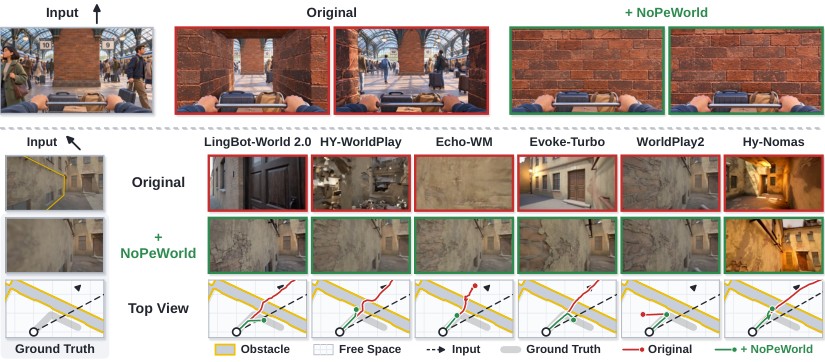
The public presentation demonstrates changes in camera paths, object interactions and tests of robotic tasks. One example reconstructs a hotel floor to plan a robot’s route. Others examine object manipulation and different viewpoints within the same scene. These are simulations and generated renderings, rather than recordings of physical robots completing those tasks.
For robotics teams and filmmakers, the prospect is appealing: testing different scenarios in the same place before committing equipment and production time. A robot’s route or a camera movement could first be planned digitally. Turning a convincing demonstration into a reliable professional workflow, however, remains the next step.
The distance from everyday use
The researchers describe substantial limitations. Reconstruction of the example spaces typically takes ten to twenty minutes. For video rendering, they report approximately 1.5 frames per second on eight A800 GPUs under their chosen settings. Mundo is therefore not presented as a real-time tool.
The team also identifies failures involving small objects and the absence of a memory mechanism for long sequences of changes. The repository schedules code and weights for the end of November. Mundo’s current value lies in the research direction it opens up; reliable, affordable use by a small team remains an open question.
Our sources
- Mundo: From seeing a place to simulating what happens there ↗Mundo research team — Hugging Face · 23 October 2026 · Checked 24 October 2026
- Mundo: Customized World Model ↗Mundo research team · Checked 24 October 2026
- Mundo repository — code and weights roadmap ↗Luo-Yihang — GitHub · Checked 24 October 2026
- Yihang Luo — research affiliation ↗Yihang Luo · Checked 24 October 2026
AI tools assist our editors. Articles are published after human approval. Practical examples are ΠΕΡΑ analysis unless stated otherwise. How we work