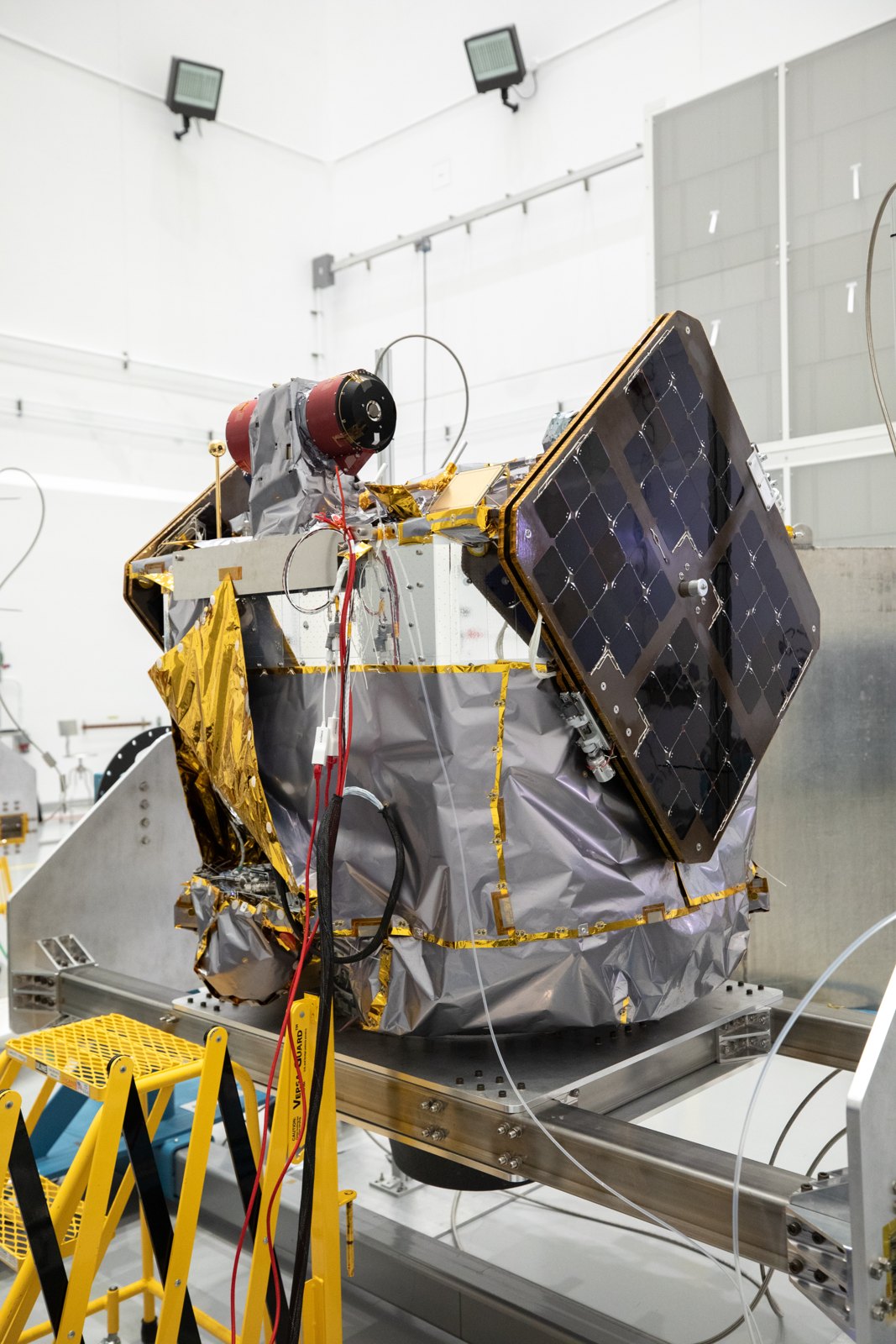
NASA’s twin ESCAPADE spacecraft completed powered Earth flybys on November 7 and 9 and are now heading toward Mars. The spacecraft passed Earth on separate days, combining the planet’s gravity with a burn from their own engines. NASA confirmed the second flyby on November 9.
The mission launched in November 2025. Rather than leave immediately for Mars, the spacecraft spent about a year in an orbit near the Earth–Sun L2 balance point. They then returned toward Earth when the relative positions of the two planets favoured departure.
Why the mission needs two spacecraft
Mars orbit insertion is scheduled for September 7 and 9, 2027. The spacecraft will then need time to move into position. NASA expects science observations to begin in June 2028.
The two probes can measure how the solar wind interacts with the Martian environment at different locations at the same time. That lets researchers distinguish a local difference from a change over time as they investigate how Mars loses atmosphere.
Our sources
- ESCAPADE Completes Powered Earth Flybys, Now En Route to Mars ↗NASA · 9 November 2026 · Checked 14 November 2026
- ESCAPADE Trans-Mars Injection Animations ↗NASA SVS · 12 November 2026 · Checked 14 November 2026
AI tools assist our editors. Articles are published after human approval. Practical examples are ΠΕΡΑ analysis unless stated otherwise. How we work