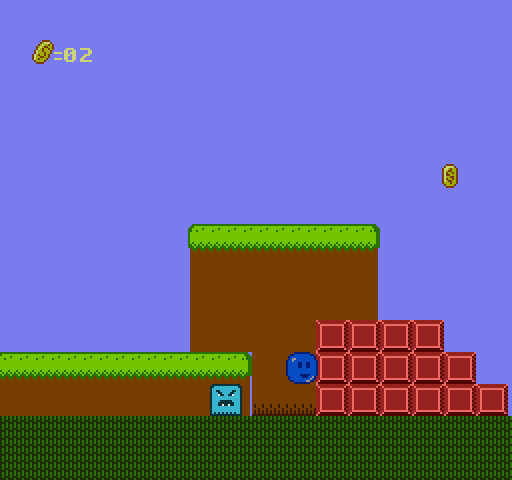
A neural network can execute the instructions of an old games console without learning from gameplay examples. That is the demonstration behind NESformer, the experiment Drew Breunig published on October 30: the Nintendo Entertainment System’s 6502 processor is represented inside a model’s numerical weights.
The distinction from an AI game player matters. A compiler—a program that translates a specification into an executable form—computed those weights. The model executes the virtual machine’s instructions step by step; it is not merely predicting what the next screen should look like. The project builds on Divyansh Agrawal’s earlier Qwenputer work.
Real computation, substantial limits
The weights file contains about 466.6 million parameters and occupies 933 MB, with most values set to zero. On DEV Community, Frank Chu published his own check confirming the sizes and comparing 2,000 execution tokens against a reference processor, with no mismatch in that test.
The entire console does not live inside the network. A host program handles graphics, controls and part of the timing. Support is limited to NROM cartridges, and there is no audio. The creator reports that even the accelerated path remains roughly 150–290 times slower than an actual NES.
The result is more interesting as a construction than as a way to play games. It shows that a model-format file can contain a precisely specified computer. It does not demonstrate that a language model learned physics or acquired general programming abilities. Nor does the code’s open licence grant rights to commercial games: each ROM needs its own lawful source.
Our sources
- NESformer README, implementation and verification notes ↗Drew Breunig / GitHub · 30 October 2026 · Checked 31 October 2026
- A working Nintendo lives in 1 GB of Qwen weights. I ran it and counted the nonzero ones. ↗Frank Chu / DEV Community · 30 October 2026 · Checked 31 October 2026
- dbreunig/nesformer ↗Simon Willison · 30 October 2026 · Checked 31 October 2026
- ROM sources and separate licensing ↗Drew Breunig / GitHub · 30 October 2026 · Checked 31 October 2026
AI tools assist our editors. Articles are published after human approval. Practical examples are ΠΕΡΑ analysis unless stated otherwise. How we work