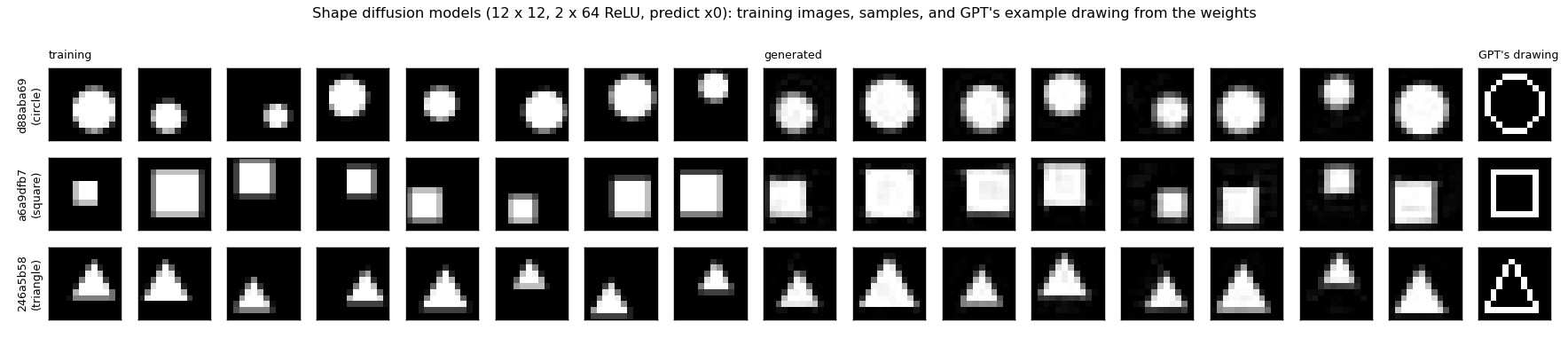
A large language model has directly changed the numerical parameters of a smaller one and improved its maths performance. On November 2, MIT CSAIL researchers presented Weight-Space Programming: experiments in which GPT-6 Astra inspects or rewrites neural-network weights, rather than merely producing code to train a network.
In the most striking example, Qwen3.5-0.8B was getting stuck in repetitive reasoning. The researchers say Astra identified a direction in two network layers and altered 131,072 weights, about 0.016% of the model. With a budget of 50 practice forward passes, its MATH-500 score increased from 7.9% to 48.1%.
This did not happen without computation or examples. Astra could use Python and practice problems, while conventional gradient-based training was not used to calculate the edits. That distinction matters: the experiment demonstrates another way of finding changes, without establishing that it is generally cheaper.
What the evidence establishes
The team released logs, evaluation code and exact weight differences. The public checkpoint’s model card records a re-run by akhaliq using ML Intern on Hugging Face: the edited model scored 51% on the full MATH-500 benchmark. The accompanying baseline check used only 25 problems, so it is not a complete new comparative study.
In an additional test on Gemma 3 270M, which rarely gets stuck in repetition, the team could not establish an improvement. Fixing a loop is not the same as teaching a model a new mathematical capability.
The prospect is attractive for diagnosing specific failures in small models. Turning these experiments into dependable interventions in larger systems remains an open research problem.
Our sources
- Sparks of Weight-Space Programming ↗Rikiya Takehi, Jayden Teoh, Alex Zhang, Omar Khattab · 2 November 2026 · Checked 3 November 2026
- Experiment logs and licensing ↗MIT research authors / GitHub · 2 November 2026 · Checked 3 November 2026
- Edited model card and reproduction ↗RikiyaT / Hugging Face · 2 November 2026 · Checked 3 November 2026
AI tools assist our editors. Articles are published after human approval. Practical examples are ΠΕΡΑ analysis unless stated otherwise. How we work